
Projects
Serene Potential ERP
A practice management system for a therapy service whose clinicians are almost never in the same building.
- Client
- Serene Potential
- Field
- Occupational therapy & wellness
- Services
- UX/UI Design, Systems development
- Year
- 2026
The brief
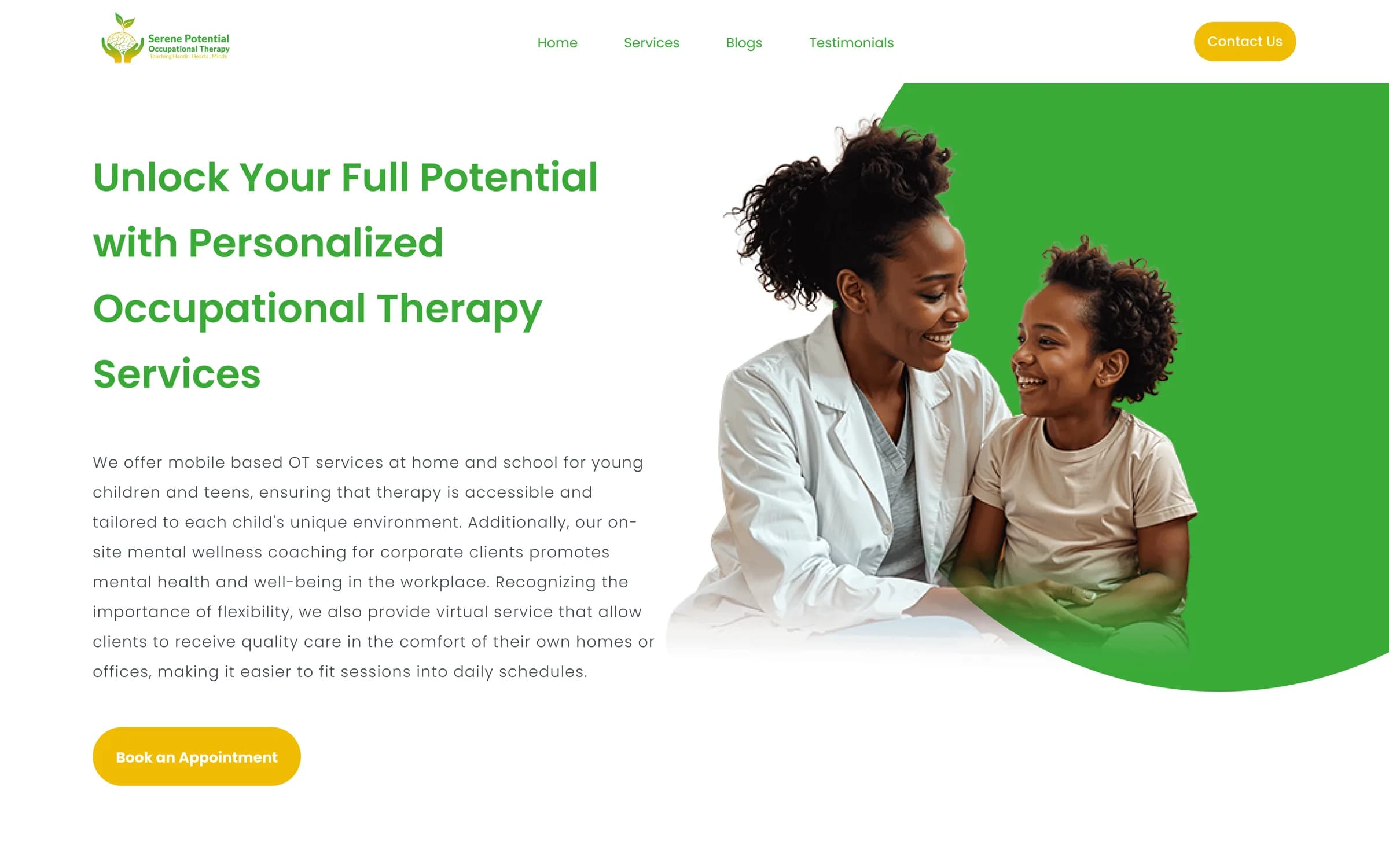
Serene Potential, based in Harare, runs mobile occupational therapy for children and wellness coaching for corporate clients. The distinguishing feature of the practice is also its hardest operational problem: therapists travel to homes, schools and offices, so on any given day the practice is spread across a city rather than gathered in a clinic.
Off-the-shelf practice software assumes a building. It assumes a front desk taking bookings, a waiting room, and clinicians who are reachable at a desk. None of that describes how Serene Potential works, and the workarounds — spreadsheets, message threads, manual payout calculations — were consuming time that should have gone into sessions.
Our approach
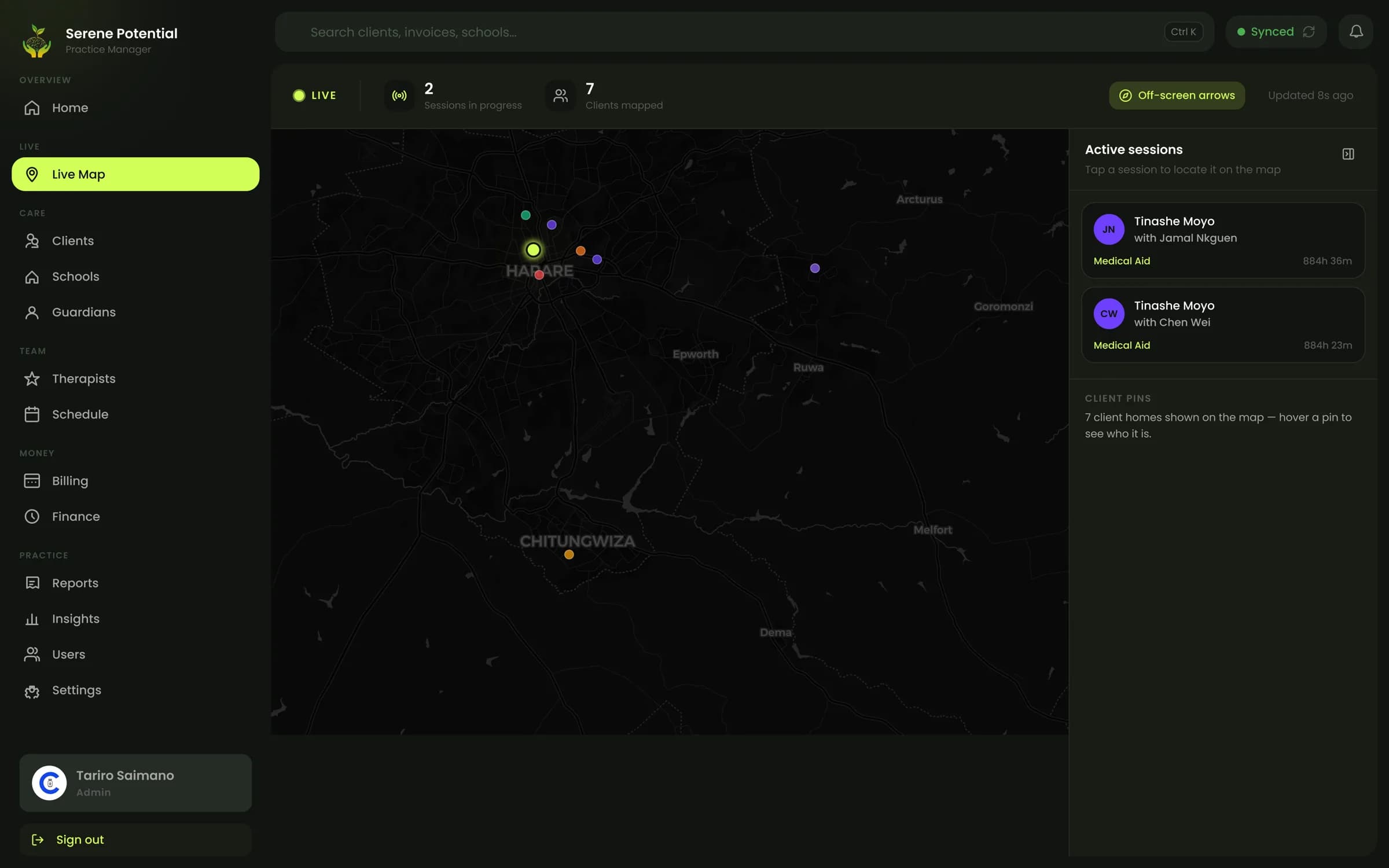
We built the system around location rather than around a calendar. The live map is the default view because the first question the practice asks each morning is where everyone is — which sessions are running, who is between visits, and whether anything needs attention right now.
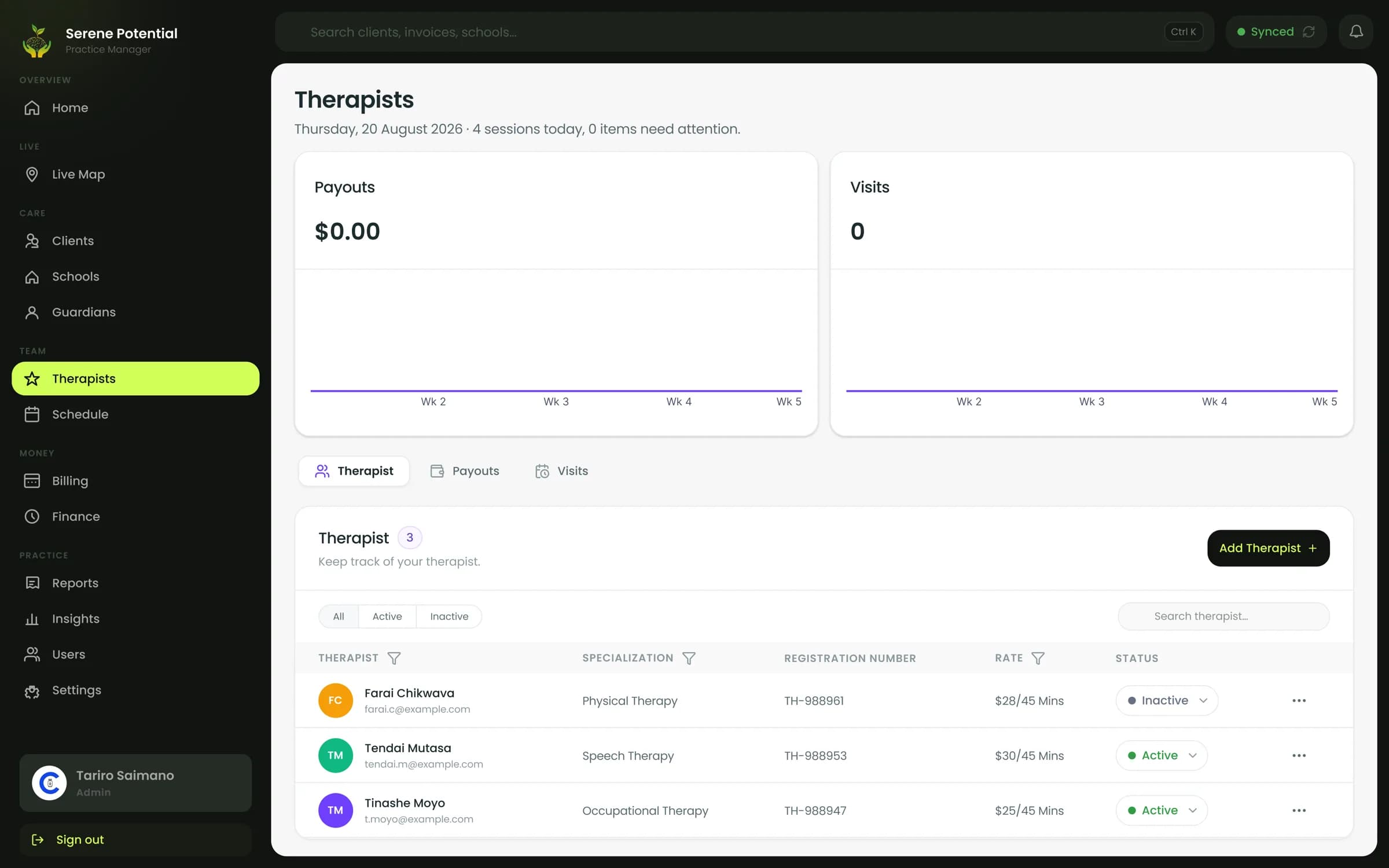
Everything else follows from the mobile model. Therapists carry specialisations, registration numbers and individual rates, so payouts are derived from completed sessions rather than reconciled by hand at month end. Schools and corporate clients are first-class records alongside individual families, because a single partner school can account for a large share of a week.
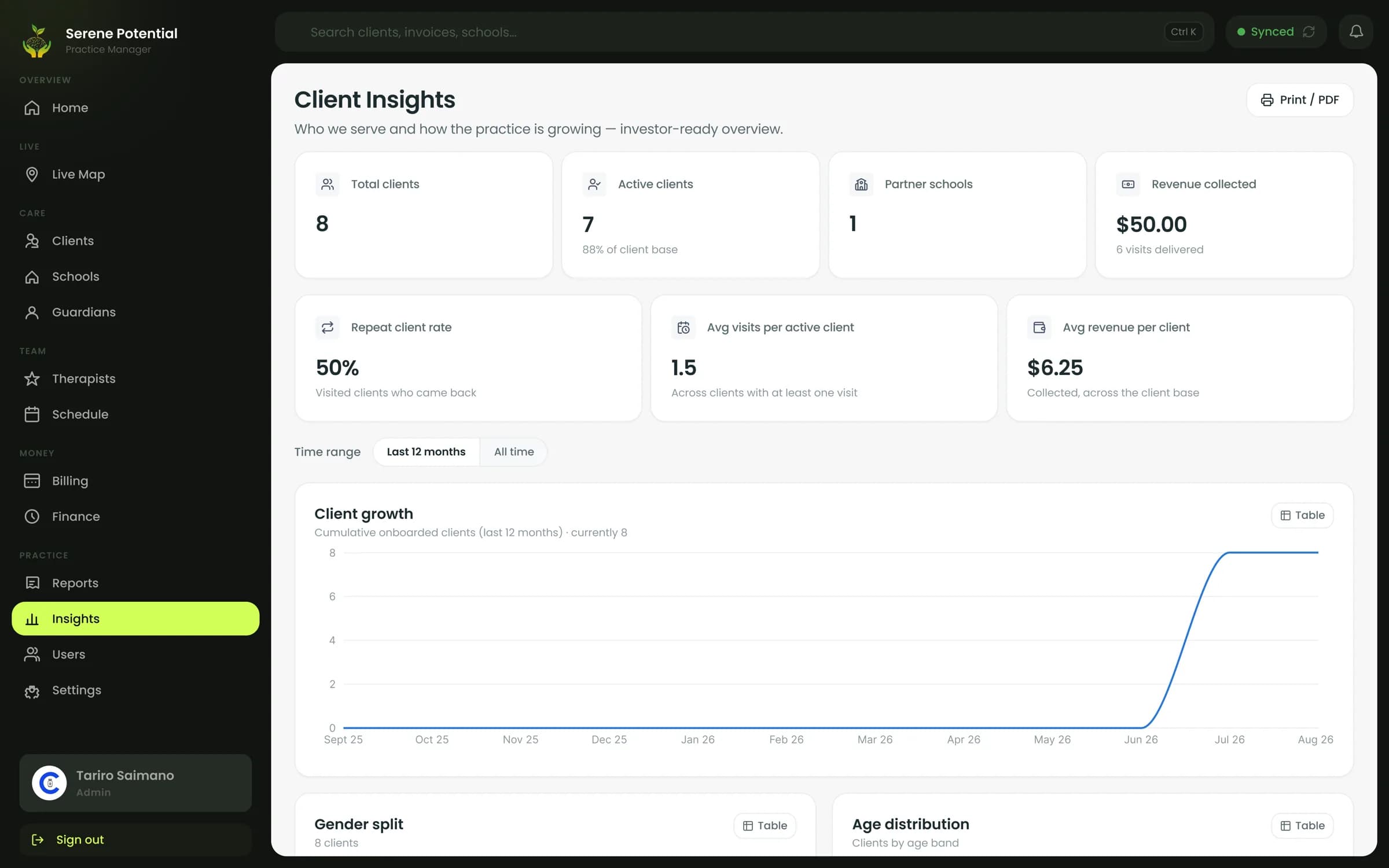
The reporting side answers the questions an owner actually gets asked. Repeat client rate, visits per client and revenue per client are on the front page of insights, because a practice that grows by referral needs to know whether people come back, not just how many arrived.
What we built
A custom practice management system covering the working day end to end, plus the public site that feeds it.
- Live map of sessions in progress, as the default operational view
- Client, school and guardian records, with partner organisations treated as first-class
- Therapist roster carrying specialisation, registration and rate
- Scheduling across home, school and workplace visits
- Billing and finance, with payouts derived from completed sessions
- Insights covering client growth, repeat rate, visits and revenue per client
- Reports and user management for day-to-day administration
- Public marketing site with an appointment booking route
Results
The practice now runs from one system instead of a spreadsheet and a message thread. Bookings, client records and payouts sit in the same place, and the questions that used to require an afternoon of reconciliation are answered on a dashboard — which for a small practice is time returned directly to clinical work.